 how-to
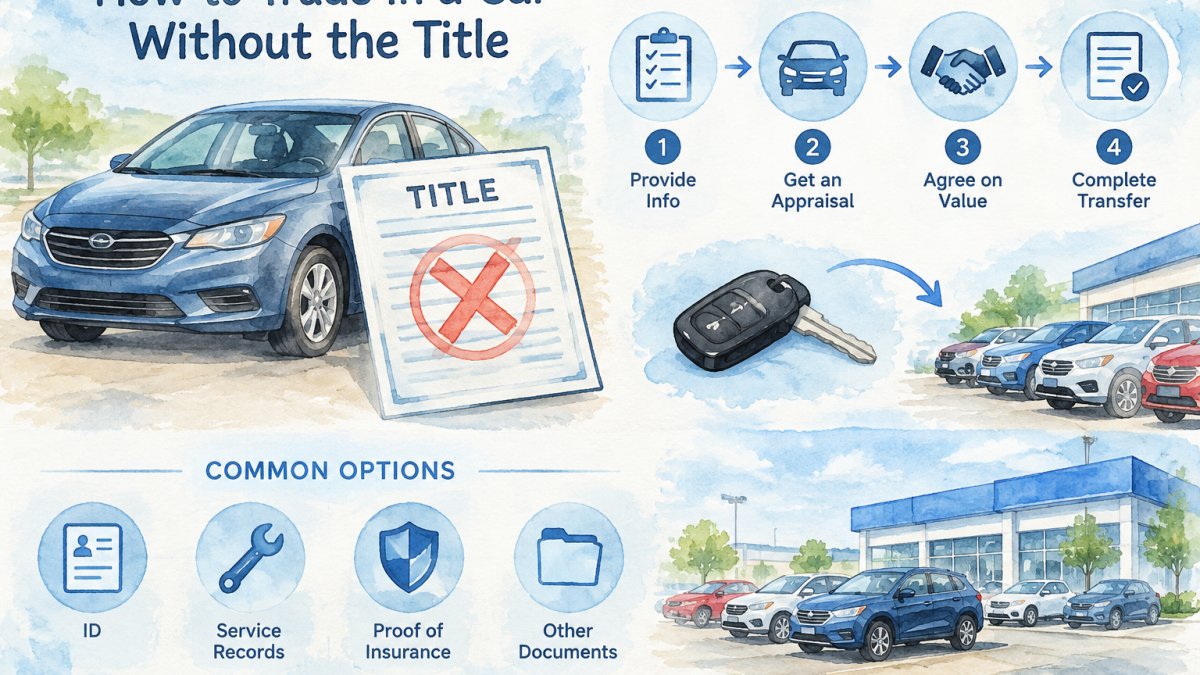
How to Trade In a Car Without the Title
Last Updated: November 4, 2026
Quick Summary
To learn how to trade in a car without the title, first confirm whether a lienholder holds it or the title is simply lost. If lost, apply for a duplicate title at your state DMV; if a loan is open, the dealer pays off the lender and the title is released.
- A duplicate title application typically requires your ID, VIN, proof of ownership, and the state title fee.
- Applying for a duplicate title while a lien is active is the most common reason applications get rejected.
- With an open loan, the dealer sends payment to the lienholder, who then releases the title.
- A payoff confirmation is not the same as a recorded lien release; verify the DMV record shows no lien.
- Private buyers usually want the title in hand, making a dealership more flexible when it is missing.
Table of Contents
- Why a Title Is the First Thing a Dealer Asks For
- How to Get a Replacement Car Title
- Trade In a Car With a Lien Still on It
- What Do I Need to Trade In My Car at a Dealership?
- How to Trade In a Car Without the Title Online
- Selling to a Dealership vs. a Private Buyer When the Title Is Missing
- When You Can and Cannot Trade In Without a Title
- Start Your Trade-In Appraisal With Silverton Motors
- Frequently Asked Questions
Why a Title Is the First Thing a Dealer Asks For
A car title is the legal document that proves who owns a vehicle.
The title is the proof of ownership. It carries the vehicle identification number, the owner's name, and any lienholder on record.
No title means no clean transfer. That is the short version.
Most people assume a missing title kills the deal. It usually just delays it. The real problem is not the missing paper. It's not knowing which path applies to your situation.
Below, we break down each path, from a duplicate title request to a lien payoff, so you can pick the right one and get moving.
How to Get a Replacement Car Title
A replacement car title, also called a duplicate title, is a copy of your original certificate of title issued by your state DMV. You apply for it, pay the state fee, and wait for it to arrive.
The process differs by state, but the core steps are the same almost everywhere. Here is the flow we walk customers through.
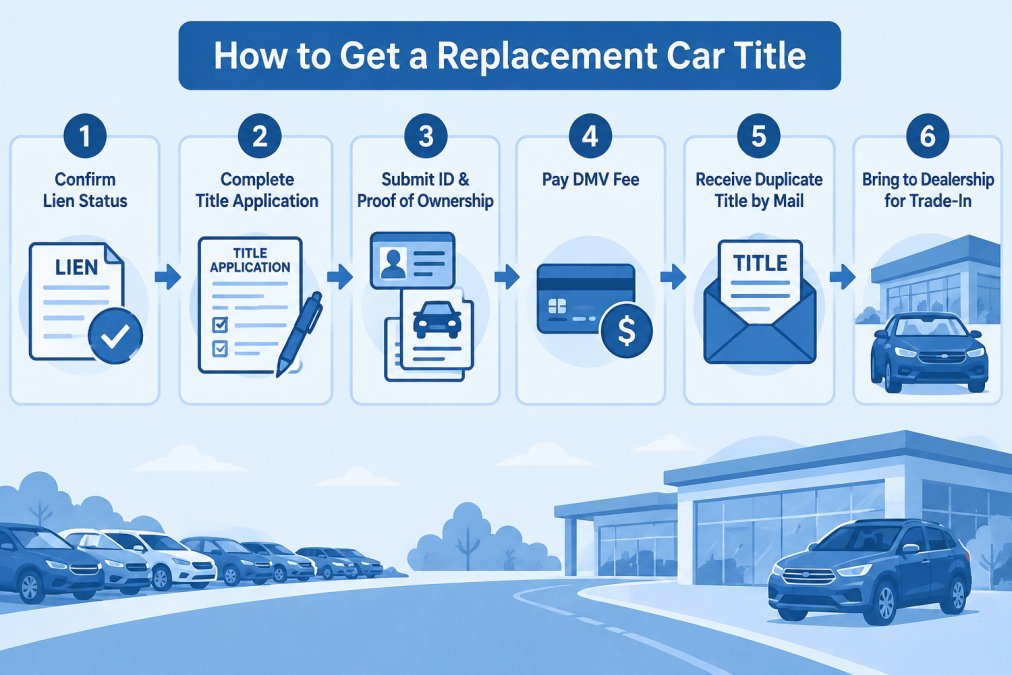
Applying for a Duplicate Title Through the DMV
Start by confirming there is no lien on the vehicle. A lienholder on record usually blocks a duplicate title until the loan is paid off or the lender releases interest.
Then complete your state's duplicate title application. You will typically need:
- Your driver's license or state ID
- The vehicle identification number
- Proof of ownership, such as a registration card
- Payment for the state title fee
Some states require a notarized signature. A few let you apply online. Check your state DMV's official title replacement page for the exact forms, because requirements and processing times vary widely.
Watch out: applying for a duplicate title while a lien is still active is the most common reason applications get rejected. Confirm lien status first.
Electronic Titles and Out-of-State Paperwork
An electronic title, or ELT, is a title held digitally by the state rather than printed on paper. Many lenders and states use ELT systems, which can actually speed up a trade-in because the dealer can verify ownership electronically.
Out-of-state titles add a wrinkle. If your title was issued by another state, your current state's DMV may need to convert it before a dealer can process the transfer. Ask the dealer whether they can handle an out-of-state title directly.
Trade In a Car With a Lien Still on It
You can trade in a car with a lien, and it happens all the time. Your loan can be paid off from the trade-in offer, and any remaining equity goes to you. The catch is that the title sits with the lienholder until that payoff clears and the release is recorded.
Here is how the sequence usually works:
- The dealer appraises your car and makes an offer.
- You provide the lender's payoff amount, often called a 10-day payoff.
- The dealer sends payment to the lienholder.
- The lienholder releases the title to the dealer.
- The deal closes once the title arrives and the release is verified.
If you owe more than the car is worth, that difference is negative equity. Ask upfront how any shortfall would be handled.
Getting a Signed Release From the Lienholder
A signed release, sometimes called a lien release letter, is a document from your lender confirming the loan is paid and their interest in the vehicle is removed. It is the piece that unlocks the title.
Request it in writing as soon as the payoff is made. Keep a copy. If the title is electronic, the lender may release it directly to the state instead of mailing paper.
A common mistake is assuming a paid-off loan automatically clears the title. It does not always. The release has to be recorded.
Verifying the Lien Release With the DMV
This is the step most guides skip, and it is where deals stall. A payoff confirmation from your lender is not the same as a recorded lien release. The DMV's vehicle record has to show the lien removed before a clean title can be issued or transferred.
Here is how to verify it:
- Ask the lender for the release document and the date they submitted it to the state, if they handle electronic release.
- Request a copy of the vehicle record from your state DMV, sometimes called a title abstract or vehicle record inquiry, and confirm the lienholder field is blank.
- If the record still shows a lien after the payoff, ask the lender to re-submit the release and get a confirmation number or reference.
- Keep the payoff letter, the release letter, and the DMV record together. A dealer will want all three if the record is slow to update.
Watch out: a release that was mailed but never recorded can leave a lien on the DMV record for weeks, and a dealer cannot complete the transfer until that field clears. Follow up in writing rather than assuming the paperwork landed.
When the Release Is Lost or the Lender Is Gone
Lenders merge, close, or sell servicing rights, and a release can go missing. If the original lender no longer exists, ask the surviving institution or servicer for a release on the paid account. If no one can produce it, your state DMV may accept an alternative, such as a notarized statement of facts or a bond, depending on state rules. Confirm the accepted path with your DMV before promising a dealer a closing date.
What the Dealer Needs From You
Bring the lender's name and account number, the payoff letter, and any release documentation you already have.
What Do I Need to Trade In My Car at a Dealership?
Bring these items to a trade-in appointment, whether or not you have the title in hand:
- Government-issued photo ID
- Vehicle registration
- Current payoff letter, if a loan is open
- All keys and remotes
- Maintenance records, if you have them
- The title, or a duplicate title application receipt
You will also sign an odometer disclosure statement at the dealership. Federal rules require it on most vehicle transfers, and the dealer handles the form.
Missing paperwork slows the deal. Missing the title does not have to stop it. For a closer look at the documents and scheduling side, see Easy Access to Vehicle Information and Appraisal Scheduling.
How to Trade In a Car Without the Title Online
Online trade-in tools let you start the appraisal before the paperwork is settled. You enter your VIN, mileage, and condition, and you get an offer range. The title question comes up later, at the verification stage.
Here is the practical sequence for an online trade-in without a title:
- Get an online appraisal using your VIN.
- Tell the dealer the title is missing or held by a lender.
- Follow the duplicate title or lien release steps above.
- Complete the final inspection and sign the transfer once the title is available.
Some online car buying services will not touch a deal without a clean title in hand. A local dealer often has more flexibility because a person can work through the lien or duplicate title process with you. If you are weighing those two paths, our guide to dealer trade-ins versus online car buying services covers the differences.
Selling to a Dealership vs. a Private Buyer When the Title Is Missing
A private buyer usually wants the title in hand before handing over cash. That makes a missing title a bigger obstacle in a private sale than at a dealership. Most private buyers will not accept a promise that the title is "coming."
The trade-off is real. A private sale can sometimes net more, but it also puts the paperwork burden on you. When the title is missing, that burden gets heavier. Our breakdown of trade-in value versus a private sale walks through the math.
When You Can and Cannot Trade In Without a Title
You can usually trade in without the title when a lienholder holds it and a payoff is in progress, or when a duplicate title application is already filed.
A power of attorney can help in one specific case. If the titled owner cannot be present to sign, a POA document may let someone sign on their behalf.
Watch out: never sign a title over to a dealer or buyer before the payoff clears.
If you want to understand how a fair offer gets built despite a missing title, read our guide on how to get a fair trade-in offer.
Start Your Trade-In Appraisal With Silverton Motors
A missing title is a paperwork problem, not a dead end. The fix is almost always one of three things: a duplicate title from the DMV, a lien payoff and release, or a power of attorney when the owner cannot sign.
Here is the short version to keep handy:
| Situation | First Step | Who Handles It |
|---|---|---|
| Title lost or damaged | Apply for duplicate title at DMV | You, then dealer |
| Loan still open | Request 10-day payoff | Dealer pays lender |
| Lien just paid off | Get signed lien release | You, then lender |
| Title held electronically | Confirm ELT status | Dealer verifies |
| Out-of-state title | Ask dealer about conversion | Dealer or DMV |
| Owner cannot sign | Prepare power of attorney | You, then DMV |
We keep a stock of used cars, trucks, and SUVs in inventory.
Get started with Silverton Motors and turn your title question into a real offer. Start your trade-in appraisal online today.
Frequently Asked Questions
Can I trade in a vehicle with no title at all?
Most dealerships will not complete a trade-in without a title because they cannot legally transfer ownership or resell the vehicle. The practical path is to apply for a duplicate title through your state DMV first. If a lien exists, the lienholder holds the title and must release it or send it to you before the dealer can process the trade. Ask the dealership what they can do while your replacement title is being processed.
Does a title have to be in my name to trade it in?
Yes, in nearly every case the name on the title must match the person trading in the vehicle. If you bought the car and never transferred the title, or you inherited it from a family member, the DMV needs to update ownership before a dealer can accept it. Bring your bill of sale, signed release, or estate documents to the DMV to correct the name, then trade in with a clean title.
Can I trade in a car if I still owe money on it?
You can, but the lienholder controls the title until the loan is paid off. The dealer contacts the lienholder for a payoff amount, pays that amount as part of the deal, and gets a signed release so the title can be transferred. If your trade-in value is less than the payoff amount, the difference is added to your new loan or paid upfront. Verify the payoff amount in writing before signing.
What should I do if I lost my car title?
Apply for a duplicate title with your state DMV as soon as you notice it is missing. You will typically need a completed title application, photo ID, proof of ownership such as your registration, and the duplicate title fee. If a lien exists, contact the lienholder first because they may hold the electronic title. Once the duplicate arrives, bring it with your ID and odometer reading to the dealership for the trade.