 how-to
How Much Should a First Car Cost? Build Your Budget
Last Updated: November 5, 2026
Quick Summary
A first car should cost only what fits your full budget after insurance, fuel, upkeep, registration, and savings. Set a firm limit for the full purchase total and ongoing ownership costs before shopping, and choose a vehicle that leaves room for repairs and other expenses.
- Get insurance quotes for the specific vehicle before committing.
- Compare loan terms and total repayment, not just monthly payments.
- Review the vehicle history, match the VIN, and arrange an independent mechanic’s inspection.
- Keep savings available for routine upkeep and unexpected repairs.
Table of Contents
- How Much Should a First Car Cost? Start With Your Full Budget
- Step 1: Decide How Much Car Can I Afford
- Step 2: Estimate Your First Car Monthly Payment
- Step 3: Add First Car Insurance Cost and Running Expenses
- Step 4: Use a Used Car Inspection Checklist Before You Buy
- Step 5: Choose Cash or Financing and Set Your Limits
- Step 6: Review a Used Car and Apply Online
- Frequently Asked Questions
How Much Should a First Car Cost? Start With Your Full Budget
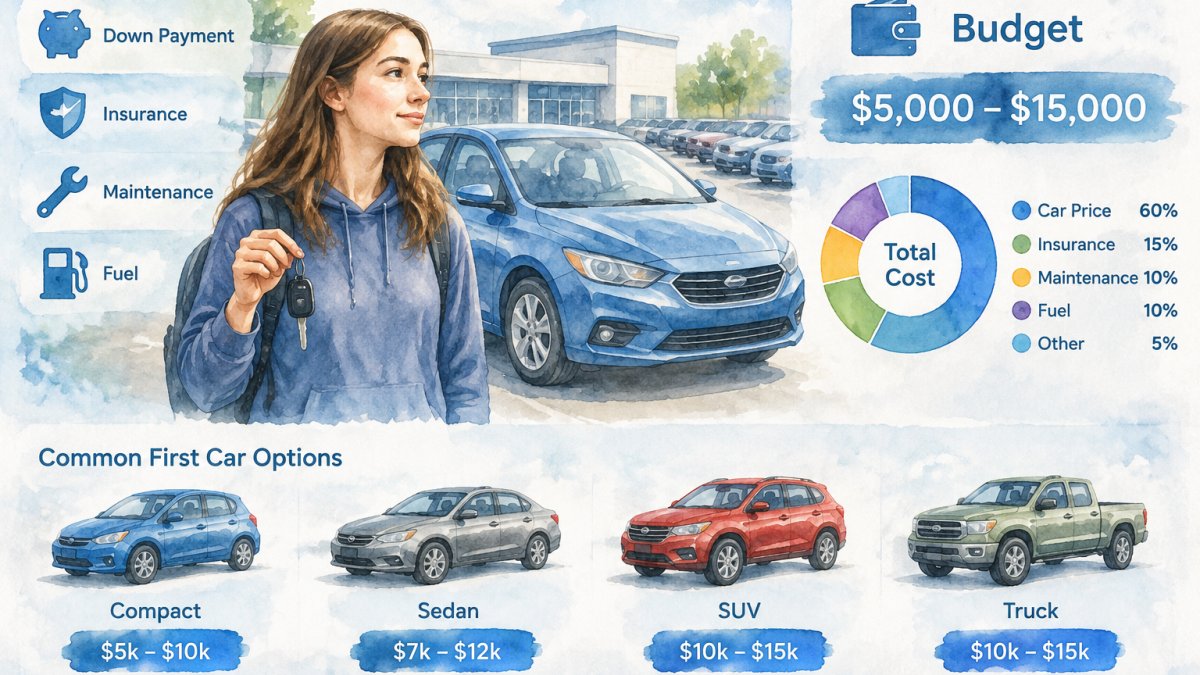
There is no single right answer to how much should a first car cost: the right amount is what fits your full budget after insurance, fuel, upkeep, and registration. Set a total ownership limit before you shop, then choose a car that leaves room for those ongoing costs. A first car budget is the plan for buying and running a car without crowding out other needs.
A common mistake is to focus on the asking price alone. A lower-priced used car can still stretch your budget if it needs repairs or costs more to insure. Start with your take-home pay, regular bills, savings goals, and the costs of owning the car.
Use this quick budget map:
| Budget item | What to include | Check before buying |
|---|---|---|
| Purchase | Price, taxes, fees | Get the full written total |
| Monthly costs | Payment, insurance | Ask for actual quotes |
| Running costs | Fuel, upkeep, registration | Plan for routine needs |
| Savings | Emergency repairs | Keep room in your budget |
For more first-time buyer planning, read our first car buying guide.
Step 1: Decide How Much Car Can I Afford
The answer to how much car can I afford depends on your full monthly budget, not just the loan payment. Add expected car costs to your current bills first. If the total leaves too little room for savings or surprise expenses, choose a less costly vehicle or wait.
Try this simple test:
- List take-home pay and fixed bills.
- Set aside savings and essential spending.
- Add estimated car costs.
- Keep a cushion for repairs and changes.
The real difference between a car that fits and one that strains your budget is often the costs that arrive after purchase. Set a firm limit before visiting a lot. That limit should cover the full purchase total and leave space for ownership costs.
Step 2: Estimate Your First Car Monthly Payment
A first car monthly payment is only one part of the monthly cost of owning a car. Estimate the payment alongside insurance, fuel, maintenance, and registration, then check whether the combined amount fits your budget. Do not choose a car based on a payment figure alone.
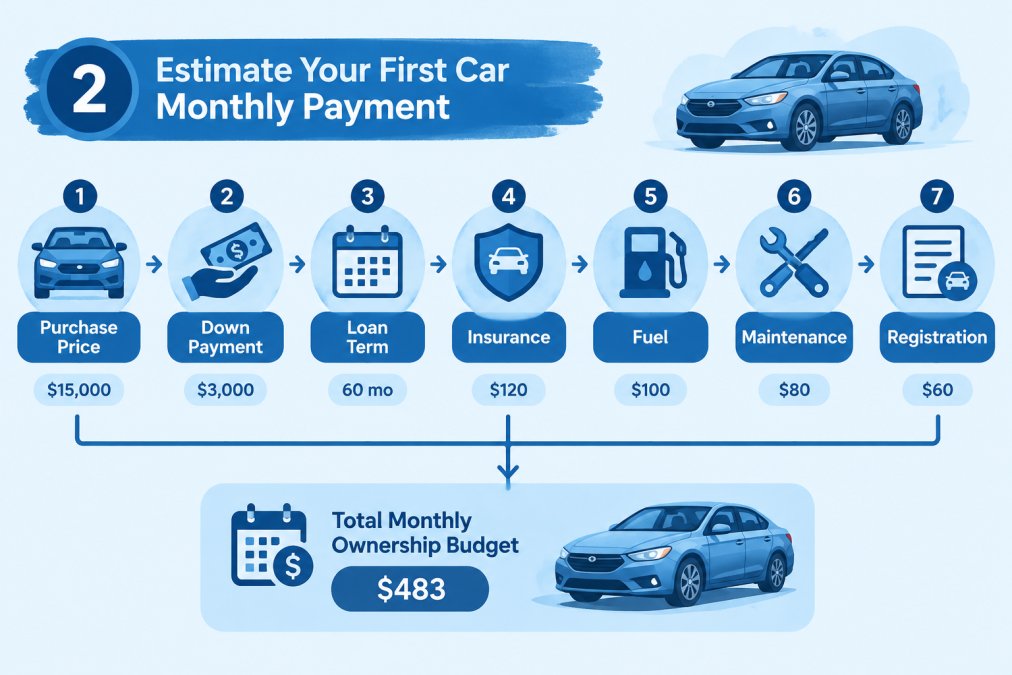
A common mistake is to focus on a low payment without checking the loan terms. A longer loan can lower the payment while keeping you in debt longer (Worried about making your auto loan payments? Your lender may have options that can help). Ask for the full terms in writing and compare the total amount you would pay.
To lower your estimate, you can:
- Set a lower vehicle-price limit.
- Use a larger down payment if it suits your budget.
- Compare loan terms, not just monthly payments.
- Review ways to lower a used car payment.
Step 3: Add First Car Insurance Cost and Running Expenses
Your first car insurance cost depends on your situation and the vehicle, so get insurance quotes before you commit. Add fuel, routine upkeep, registration, and possible repair costs to your monthly plan. The goal is a car you can keep running, not just one you can buy.
Ask insurers for quotes using the specific vehicle details. Then check how the car’s fuel needs and upkeep fit your routine. A common mistake is to shop first and check insurance later; that can rule out a car after you have grown attached to it.
Plan for these items:
- Insurance coverage and payment schedule.
- Fuel for your usual trips.
- Routine service and wear items.
- Registration and unexpected repairs.
Step 4: Use a Used Car Inspection Checklist Before You Buy
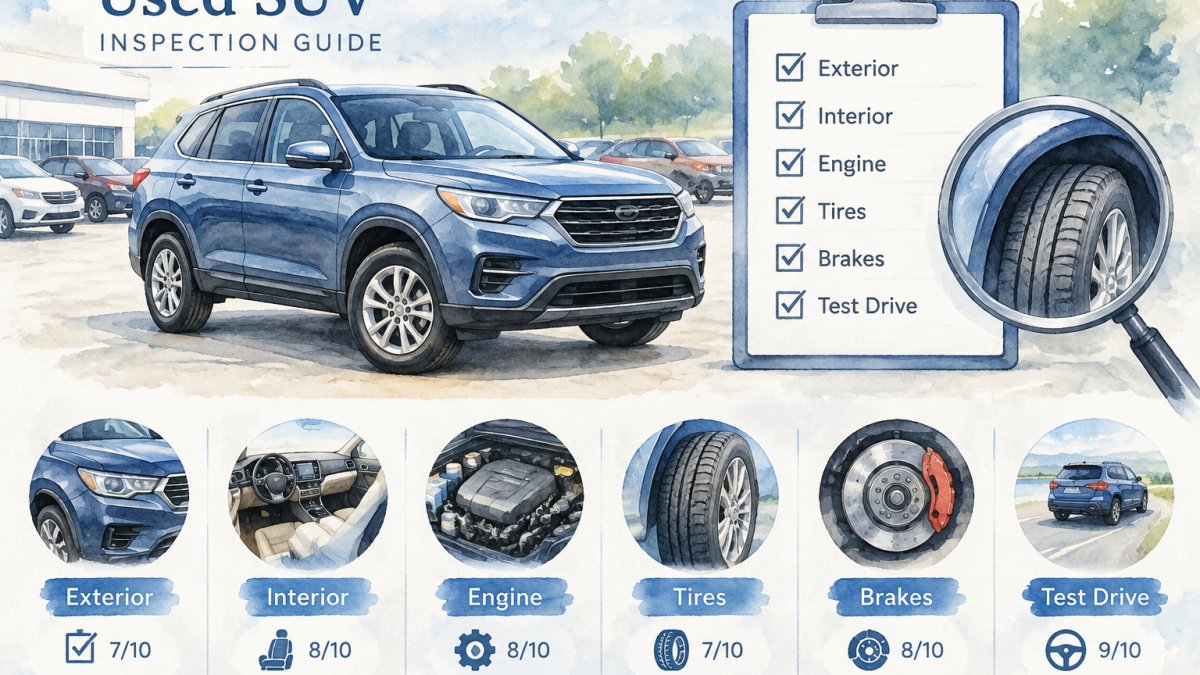
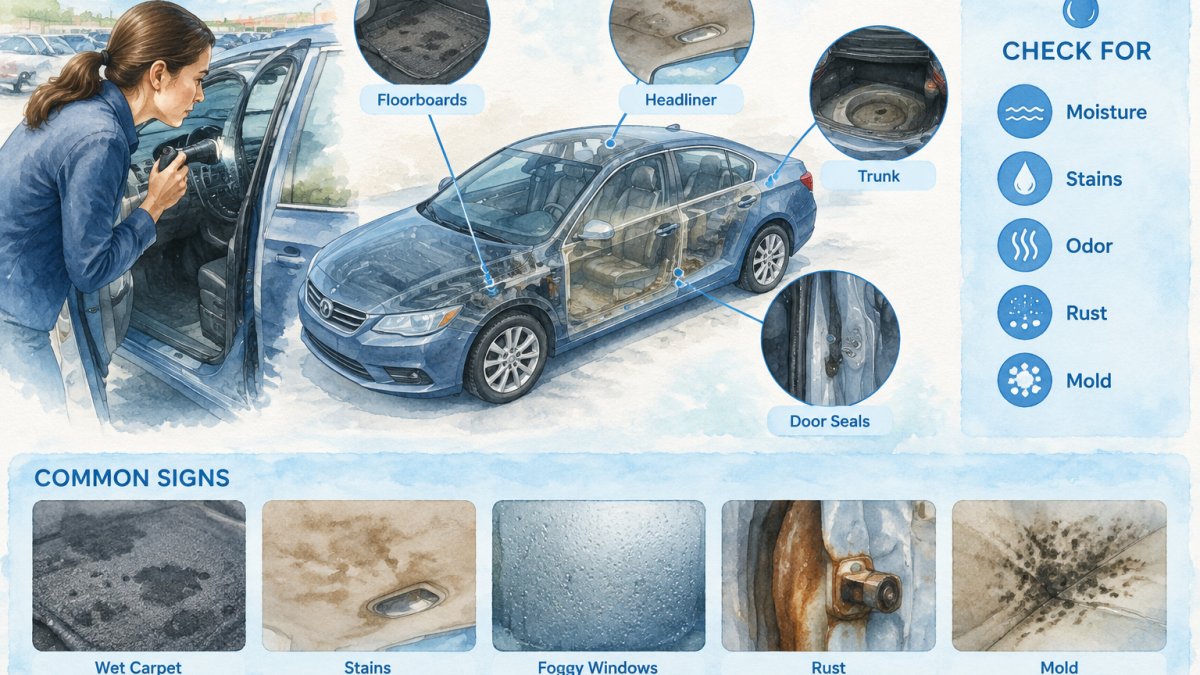
A used-car inspection should combine a history review, a careful walk-around, and an independent mechanic’s assessment (the FTC). Water damage can be concealed by cleanup, and a clean history report or title does not prove the vehicle was never flooded (Don’t get swamped buying a flood-damaged car). Use this sequence to check accessible areas without removing trim or taking the car apart.
1. Check records before inspecting. Match the VIN on the vehicle to the title and history report. Review the report for flood, salvage, rebuilt, or other title brands, and ask the seller directly whether the car has had water exposure or water-related repairs. A report can omit events that were never reported, and title records may not capture every move between states, so treat it as one source rather than a guarantee.
2. Bring simple inspection supplies. A flashlight helps you see under seats and in the trunk; a clean paper towel can help check accessible surfaces for moisture or residue. Inspect in daylight, with the vehicle parked on dry ground. Do not remove panels, crawl under an unsupported vehicle, or touch exposed wiring. Ask a qualified mechanic to inspect anything that requires disassembly or a lift.
3. Check the cabin before starting the car. Notice musty, moldy, or unusually strong fragrance odors. Lift removable floor mats and feel the carpet for dampness; look for water lines, mud, silt, grit, or recently shampooed carpet. Compare carpet, upholstery, and trim from side to side for mismatched materials or unusually new replacements.
Inspect seat belts by pulling them out fully if they move normally. Look for stains, water marks, grit, or belts that appear much newer than the surrounding interior. Check visible metal fasteners and electrical connections for rust or greenish corrosion. A clean surface does not rule out water intrusion behind door panels or beneath carpeting, where residue may remain after a cleanup.
4. Check the trunk and exterior lights. Lift the trunk floor and inspect the spare-tire well for moisture, sediment, rust, or a musty smell. Look for water residue or persistent condensation inside headlight and taillight housings. These areas can reveal water entry that is not obvious in the passenger compartment.
5. Look under the hood without touching hot or moving parts. With the engine off and cool, use a flashlight to look for mud, silt, water residue, or corrosion around visible electrical connections. Do not reach near belts, fans, or other moving components. Ask the mechanic to assess areas that are not safely visible.
6. Arrange an independent inspection and a cautious test drive. Ask the mechanic to check for corrosion, water-related residue, electrical faults, and signs of repairs. During a test drive, note warning lights, malfunctioning accessories, or inconsistent operation, but remember that a short drive cannot rule out delayed electrical problems. Water exposure can affect wiring harnesses, sensors, and control modules; corrosion may progress after the vehicle appears dry, and intermittent faults may not show up immediately.
Watch out: Saltwater exposure can be especially corrosive, while freshwater damage can also leave residue and cause electrical problems; visible water depth alone cannot establish how long the vehicle was submerged or which components were affected.
Use clear thresholds before deciding: walk away if the title or VIN does not match, the seller’s account conflicts with records, or there are multiple signs of water intrusion and the seller will not allow an independent inspection. If you find one uncertain clue, pause and request a mechanic’s written findings before proceeding. Consider moving forward only when the history, seller disclosures, and inspection results are consistent and any concerns are documented.
The [FTC guide to buying a used car | ftc.gov] explains how to review vehicle information and purchase paperwork. For a closer look before you commit, use our used car inspection checklist.
Step 5: Choose Cash or Financing and Set Your Limits
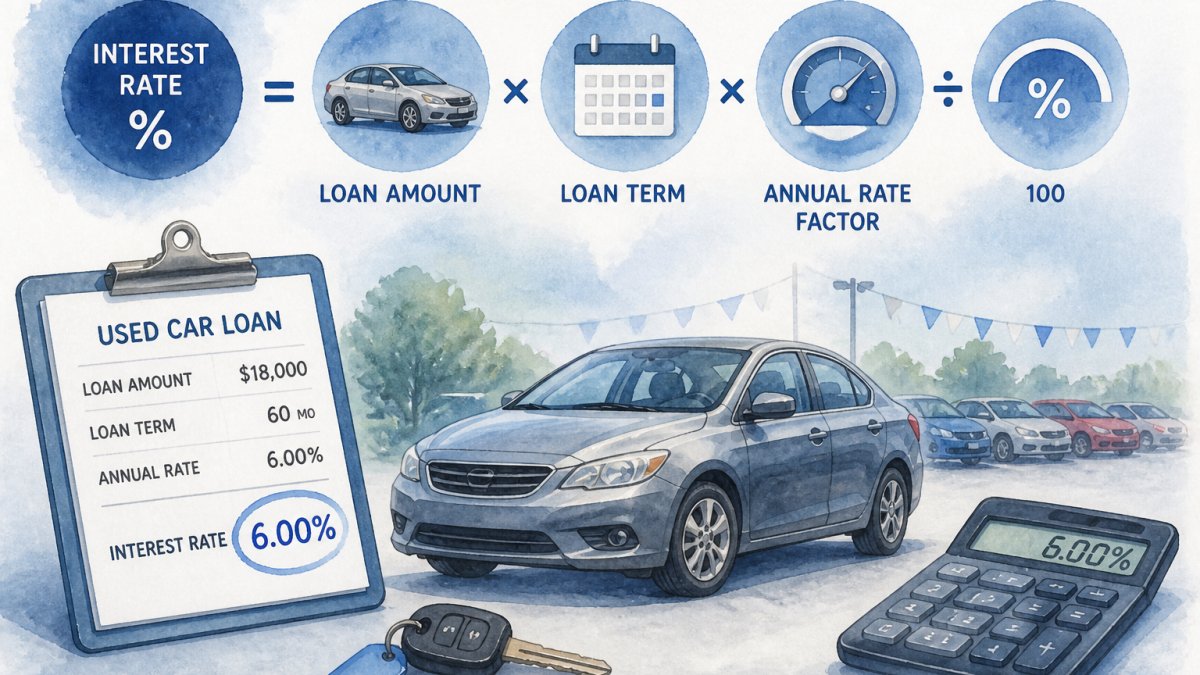
Paying cash avoids a loan payment, while financing lets you spread the purchase over time but adds interest and keeps a debt obligation in your budget. Compare the choices using the full written terms, not a monthly payment alone, and keep enough savings available for insurance, routine upkeep, and unexpected repairs.
Before you decide, write down:
- The vehicle’s full purchase total, including taxes and fees shown in the written paperwork.
- The amount you can pay upfront without using money reserved for essential bills or emergencies.
- The loan’s annual percentage rate, term, monthly payment, and total amount paid over the life of the loan, if financing.
- The estimated monthly cost of insurance, fuel, registration, and routine maintenance.
- The savings you will still have after the purchase.
Compare loan offers using the same vehicle price and down payment. A longer term may reduce the monthly payment but can increase the total interest paid and leave you owing money for longer. A larger down payment can reduce the amount borrowed, but using all available savings may leave you unable to handle repairs or other urgent expenses. Cash also has a trade-off: it avoids financing costs, but it ties up money that could otherwise remain available for other needs.
Watch out: Do not treat a payment that fits on paper as proof that the car is affordable; add insurance and operating costs, and check whether the budget still works if a repair or other expense arises.
Set a firm limit before discussing financing or choosing a vehicle. If the written terms, total repayment, or ownership costs push the plan beyond that limit, choose a less costly vehicle, reconsider the loan, or wait. Read our guide to cash versus financing for a closer look at the trade-offs.
Step 6: Review a Used Car and Apply Online
A sound buying decision combines a budget check, vehicle history review, inspection, and clear paperwork. If any major detail conflicts, pause and ask for an explanation before you apply. A rushed decision is rarely a good way to control costs.
At automotive, shoppers can browse new and used cars, trucks, and SUVs. Review the vehicle details and make sure the car fits the budget you set. For current inventory, see used car deals.
Before moving ahead, check that you have:
- A written total for the purchase.
- A vehicle history report and matching VIN.
- Answers to questions about title records and condition.
- A mechanic inspection plan.
- A monthly budget that includes ownership costs.
The hard part is balancing an affordable purchase with costs that continue after the sale. Start with your full budget, then choose a vehicle that leaves room for insurance, upkeep, and savings. Visit automotive to review available used vehicles and apply online.
Frequently Asked Questions
How much should I spend on my first car?
Set the limit from your full ownership budget rather than choosing a purchase price first. Include the monthly payment if financing, insurance, fuel, maintenance, and registration, then leave room for savings and other bills. Compare the total against your take-home pay and choose a vehicle whose costs remain manageable. The right amount varies with your income, insurance quote, driving needs, and the vehicle’s condition.
What costs should I budget for besides the car's purchase price?
Plan for insurance, fuel, maintenance, repairs, registration, taxes, and any financing costs. For a used car, set aside funds for routine service and unexpected repairs, and have an independent mechanic inspect it before purchase. Get an insurance quote for the specific vehicle before committing. These expenses affect how much car you can afford, even when the purchase price fits your savings.
What should I check on a used car before buying it?
Review the vehicle history report and title records, and compare the VIN on the paperwork with the vehicle. Look and smell for signs of water damage, including a musty odor, water lines, mud, damp or mismatched carpeting, and corrosion around metal or electrical connections. Check the trunk and spare-tire well, then arrange a mechanic inspection and test drive. A clean report does not replace a physical inspection.
Is it better to pay cash or finance a first car?
Paying cash avoids a monthly loan payment, but it should not use money needed for insurance, registration, maintenance, or emergencies. Financing spreads the purchase cost over time, while adding interest and requiring you to assess the payment alongside other ownership expenses. Compare the total amount due under the loan terms and get insurance quotes before deciding. Choose the option that leaves your overall budget workable.