 how-to
What to Look for in a Used SUV: A Buyer's Inspection Guide
Last Updated: November 5, 2026
Quick Summary
To check a used SUV, work through a fixed inspection checklist in order: exterior and body, tires and brakes, undercarriage, under the hood, history report, then a test drive. Pull a vehicle history report before paying for a pre-purchase inspection, and have your own mechanic confirm the model-specific issues you researched.
- Walk the body in daylight and check panel gaps, mismatched paint, and rust.
- Uneven tire wear points to alignment or suspension problems.
- Decode the VIN's eighth character to confirm the engine before inspecting.
- A test drive should last at least 20 minutes and include a cold start.
- Walk away if the seller refuses an independent pre-purchase inspection.
Table of Contents
- Start With a Used SUV Inspection Checklist
- How to Check Vehicle History Reports Before You Commit
- Common Mechanical Issues in Used SUVs
- Best Used SUVs Under $20,000 to Put on Your Shortlist
- SUV Drivetrain and Capability Checks Most Buyers Skip
- Test Drive and Walk-Away Criteria
- Book a Test Drive at Silverton Motors
- Frequently Asked Questions
Start With a Used SUV Inspection Checklist
Knowing what to look for in a used SUV starts with a repeatable process, not a gut feeling.
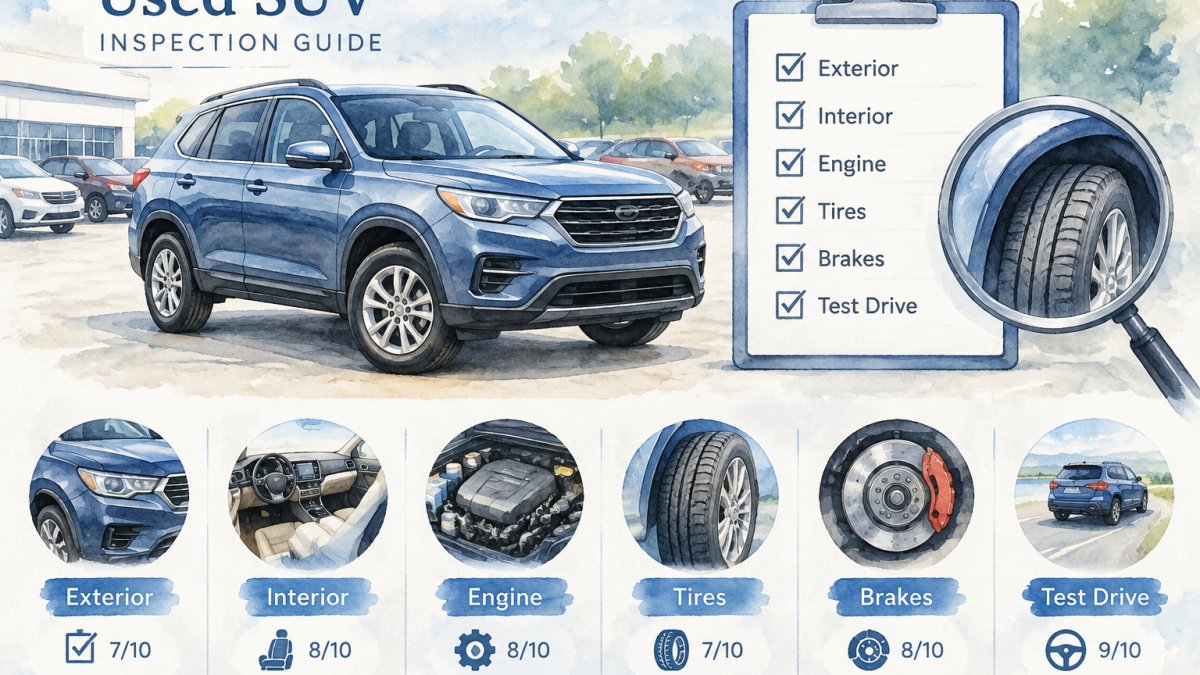
A used SUV inspection checklist is a fixed sequence of checks that forces you to look at the whole vehicle instead of falling for clean paint and a fresh detail job.
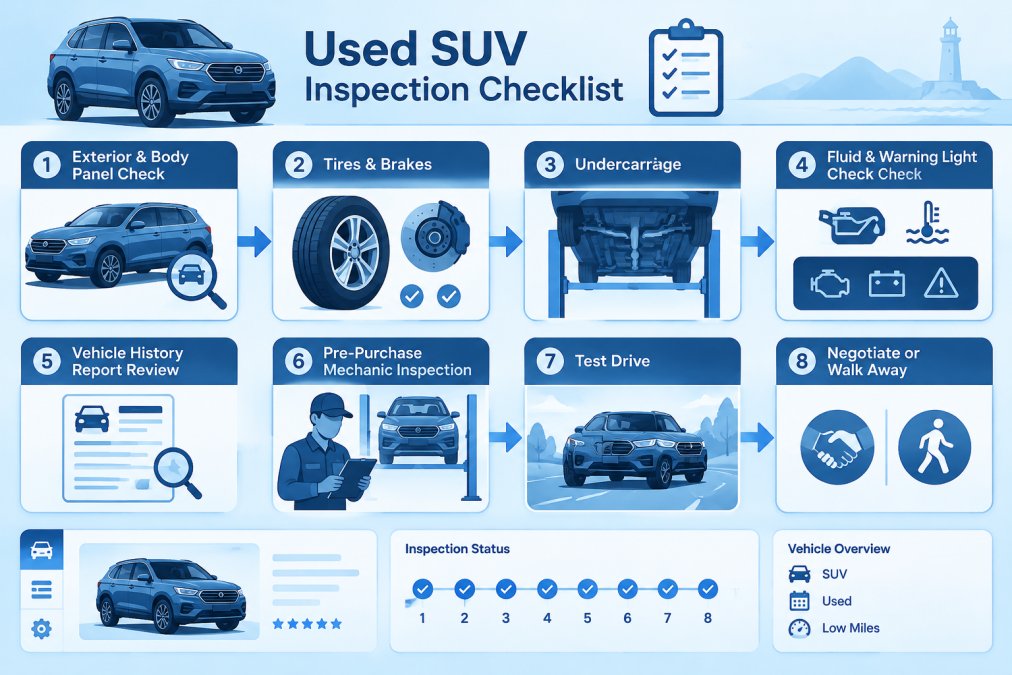
Exterior and Body Checks
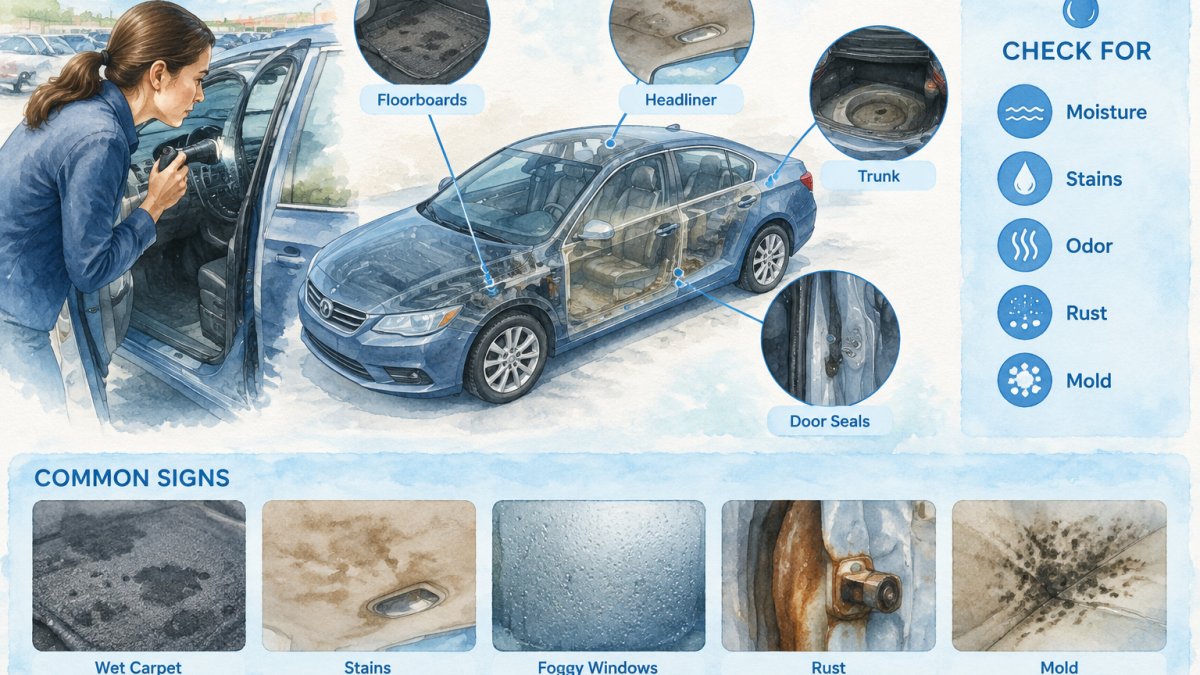
Walk the SUV in daylight, ideally when the body is dry. Water hides scratches, and shade hides color mismatches. Look down each side at a low angle and let the light run along the panels.
- Panel gaps: Run a finger along the gaps between doors, hood, and fenders. Uneven gaps suggest past collision repair.
- Mismatched paint: A door or fender that reads slightly different in sunlight has likely been repainted.
- Rust: Check wheel arches, the tailgate lip, and the lower edges of doors. Bubbling paint means rust underneath.
A common mistake is judging body damage by how shiny the paint looks. A cheap respray can look great for a month and peel by winter.
Tires, Brakes, and Undercarriage
Tires tell you more about how an SUV was treated than almost anything else. Check tread depth across all four tires, not just the outer edge.
Brakes are harder to judge from the outside. Look through the wheel spokes at the rotors for deep grooves or heavy rust.
The undercarriage matters more on an SUV than a sedan because of ground clearance and all-wheel-drive hardware.
How to Check Vehicle History Reports Before You Commit
A vehicle history report is a record of reported title events, accidents, service visits, and odometer readings tied to a vehicle identification number (Used Cars).
Pull the report before you spend money on a pre-purchase inspection.
If you are weighing report providers, our breakdown of CARFAX vs AutoCheck accident history data explains how the two services differ before you trust a single report.
Common Mechanical Issues in Used SUVs
Mechanical problems in used SUVs cluster around a few areas: the transmission, the all-wheel-drive system, the cooling system, and the suspension. These are the repairs that turn a good deal into a money pit. But broad reliability rankings will not tell you whether the specific SUV in front of you is sound. The useful move is to research the exact year, trim, and powertrain, then inspect the areas that generation is known for.
Research the Exact Year, Trim, and Powertrain
Two SUVs that share a nameplate can have completely different engines, transmissions, and drivetrains depending on the model year. A mid-cycle refresh often swaps a proven transmission for a new one, or adds a turbocharged engine in place of a naturally aspirated unit. Before you inspect, confirm the VIN and decode the eighth character, which identifies the engine, and check the trim level on the door jamb sticker or window sticker.
Once you have the exact configuration, check recall status through the National Highway Traffic Safety Administration's recall lookup. Enter the VIN, not just the year and model, because recalls are often tied to specific build dates.
For known problems, search owner forums and technical service bulletin databases for the exact year and engine. A common pattern is that a particular transmission had a valve body issue in certain build months, or a specific engine family developed timing chain wear after a certain mileage.
What to Inspect on the Vehicle
- Transmission: Ask for service records. A fluid change that never happened is a warning sign on higher-mileage SUVs. On the test drive, feel for shuddering under light acceleration, delayed engagement when shifting from park to drive, and hunting between gears on a steady climb.
- All-wheel drive: Listen for whining or clunking on a slow, tight turn in a parking lot. Check that all four tires match in brand, size, and tread depth, because mismatched tires on an AWD system can damage the transfer case over time.
- Cooling system: Check for coolant stains around hoses and the radiator, and watch the temperature gauge on the test drive. Look for a sweet smell or white residue near the water pump and thermostat housing.
Watch out: a seller who has already warmed the engine before you arrive may be hiding a cold-start rattle or a check-engine light that clears. Ask to start it cold, and if the engine is already warm, note it and plan to return for a cold start.
Use a Pre-Purchase Inspection to Confirm
A pre-purchase inspection by your own mechanic is the cheapest way to confirm or rule out the model-specific issues you found in research. Give the shop the year, engine, and the list of known problems so they can focus their time. A compression test, a scan for stored and pending codes, and a check of the transmission fluid condition will catch most of what a visual inspection misses.
Best Used SUVs Under $20,000 to Put on Your Shortlist
The best used SUVs under $20,000 are the ones with documented service history, a clean title, and a reputation for long-term dependability, not the flashiest badge on the lot. But the asking price is only the entry fee. The number that actually matters is total cost of ownership over the years you plan to keep the vehicle, and that is where most shoppers under budget.
Build a Total Cost of Ownership Estimate
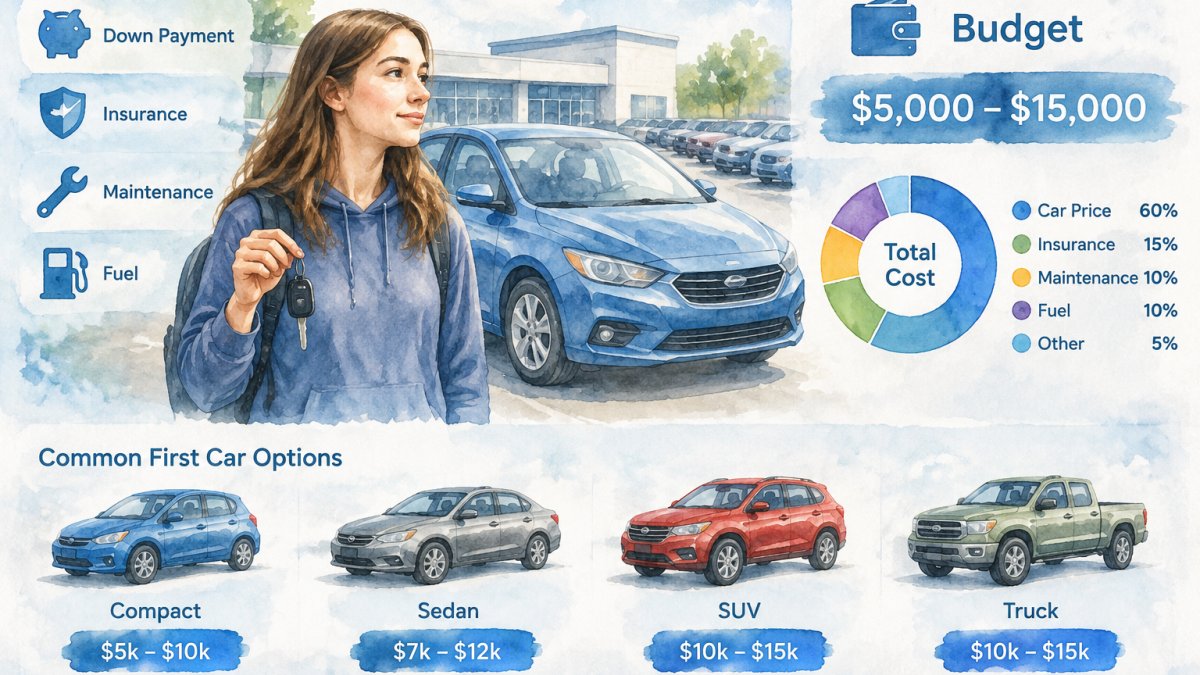
Before you shortlist a model, estimate what it will cost to own for three to five years. Use these categories and plug in real numbers from quotes and public sources rather than guessing.
- Insurance: Get a quote from your insurer using the VIN before you buy. Rates vary widely by model, trim, and safety features, and a sport trim can cost meaningfully more than a base trim of the same SUV.
- Fuel: Use the EPA's official fuel economy estimates for the exact year and trim, then multiply by your annual miles and your local fuel price. A difference of a few miles per gallon compounds over five years.
- Maintenance and repairs: Check the owner's manual for the scheduled maintenance intervals and estimate the cost of the major services due in your ownership window, such as timing belt, transmission fluid, and brake service. Budget a reserve for unexpected repairs, and set it higher for models with known problem areas.
Add those categories together and compare the total against the asking price. A cheaper SUV with high insurance, poor fuel economy, and a known transmission issue can cost more over five years than a slightly more expensive model with a clean record.
Narrow to Two or Three Models
Use the total-cost estimate to narrow your list to two or three models before you start shopping, so you can compare like for like. Prioritize models with documented service history, a clean title, and a reputation for long-term dependability in the exact year and powertrain you are considering. Avoid any SUV with a salvage or flood title, an odometer discrepancy, or a seller who cannot produce a title in their name, regardless of price.
| Priority | What to Check | Why It Matters |
|---|---|---|
| Budget | Total cost, not just asking price | Insurance, fuel, maintenance, taxes, and financing add up |
| History | Clean title, service records | Reveals neglect and prior damage |
| Mileage | Odometer vs. age | Low miles on an old SUV can mean short trips |
| Drivetrain | AWD or FWD condition | AWD repairs cost more when neglected |
| Reliability | Model-year reputation | Some years are better than others |
For a head start, our list of dependable used SUV models that hold up over time covers the nameplates worth shortlisting first.
Watch out: a low asking price can signal a problem the seller is trying to unload. If a model is priced well below comparable listings, ask why and verify the title, history report, and inspection before you get excited about the deal.
SUV Drivetrain and Capability Checks Most Buyers Skip
Drivetrain checks are where SUV shoppers leave the most money on the table. A crossover and a body-on-frame SUV drive nothing alike, and the difference shows up in towing, snow, and repair bills.
- All-wheel drive vs. four-wheel drive: AWD sends power automatically; 4WD is selected by the driver. Know which one you need.
- Ground clearance: Measure it if you plan to leave pavement.
- Towing: Check the owner's manual for the rating, and look for a factory tow package rather than an aftermarket hitch.
If towing a small trailer is on your list, our guide to used SUVs that handle a small travel trailer narrows the field to models built for it.
Test Drive and Walk-Away Criteria
A test drive should last at least 20 minutes and include a cold start, a stretch of highway, and a tight parking lot. Turn off the radio. Listen for rattles, whines, and clunks you cannot hear at idle.
Walk away if any of these appear:
- The seller refuses an independent pre-purchase inspection by your own mechanic.
- The check-engine light is on, or the seller clears codes before you arrive.
- The history report shows a salvage or flood title.
A good deal on a used SUV is one you can verify. If something does not add up, walk. There is always another vehicle.
Book a Test Drive at Silverton Motors
The checklist only gets you so far. At some point you need to stand next to the SUV, start it cold, and drive it. We keep a rotating stock of used cars, trucks, and SUVs on the lot, and we are happy to walk the inspection with you, answer questions about service history, and let you bring your own mechanic. Browse our reliable used SUVs in the Toms River inventory and pick a time that fits your schedule.
Frequently Asked Questions
How many miles is too many for a used SUV?
There is no single cutoff, but mileage matters most when it is paired with missing service records. A used SUV with higher mileage and a documented maintenance history often outlasts a lower-mileage one with no records. Check the odometer against the vehicle history report for rollback signs, and budget for wear items like brakes, tires, and suspension. Above roughly 100,000 miles, ask for proof of transmission and cooling system service, and have a mechanic inspect it before you buy.
What are the red flags to avoid when buying a used SUV?
Walk away from mismatched paint, uneven panel gaps, or fresh undercoating that hides rust. Be cautious of a seller who refuses a pre-purchase inspection or cannot produce a vehicle history report. Warning lights that stay on after startup, a transmission that slips on the test drive, and a title branded as salvage or flood-damaged are all deal breakers. Missing maintenance records on a high-mileage SUV is another reason to keep looking.
Is it better to buy a used SUV from a dealership or a private seller?
A dealership typically provides a vehicle history report, a completed inspection, and some form of warranty or return policy, which lowers your risk. A private seller may offer a lower asking price but gives you fewer protections and no recourse if problems appear later. Either way, insist on a pre-purchase inspection by your own mechanic and review the service history. At a dealership, ask directly what was inspected and get it in writing.
What should I check during a test drive of a used SUV?
Start the engine cold and watch for warning lights, then listen for ticks or knocks. Drive at city and highway speeds and feel for transmission hesitation, vibration, or pulling to one side. Test the brakes hard in a safe spot and check for grinding or a soft pedal. On an SUV, engage all-wheel drive or four-wheel drive if equipped and listen for whining from the transfer case. Finish by testing every button, screen, and climate setting.
Bring your checklist, ask the hard questions, and drive more than one SUV before you decide. Get started with Silverton Motors and find a pre-owned SUV you can trust for the daily commute.